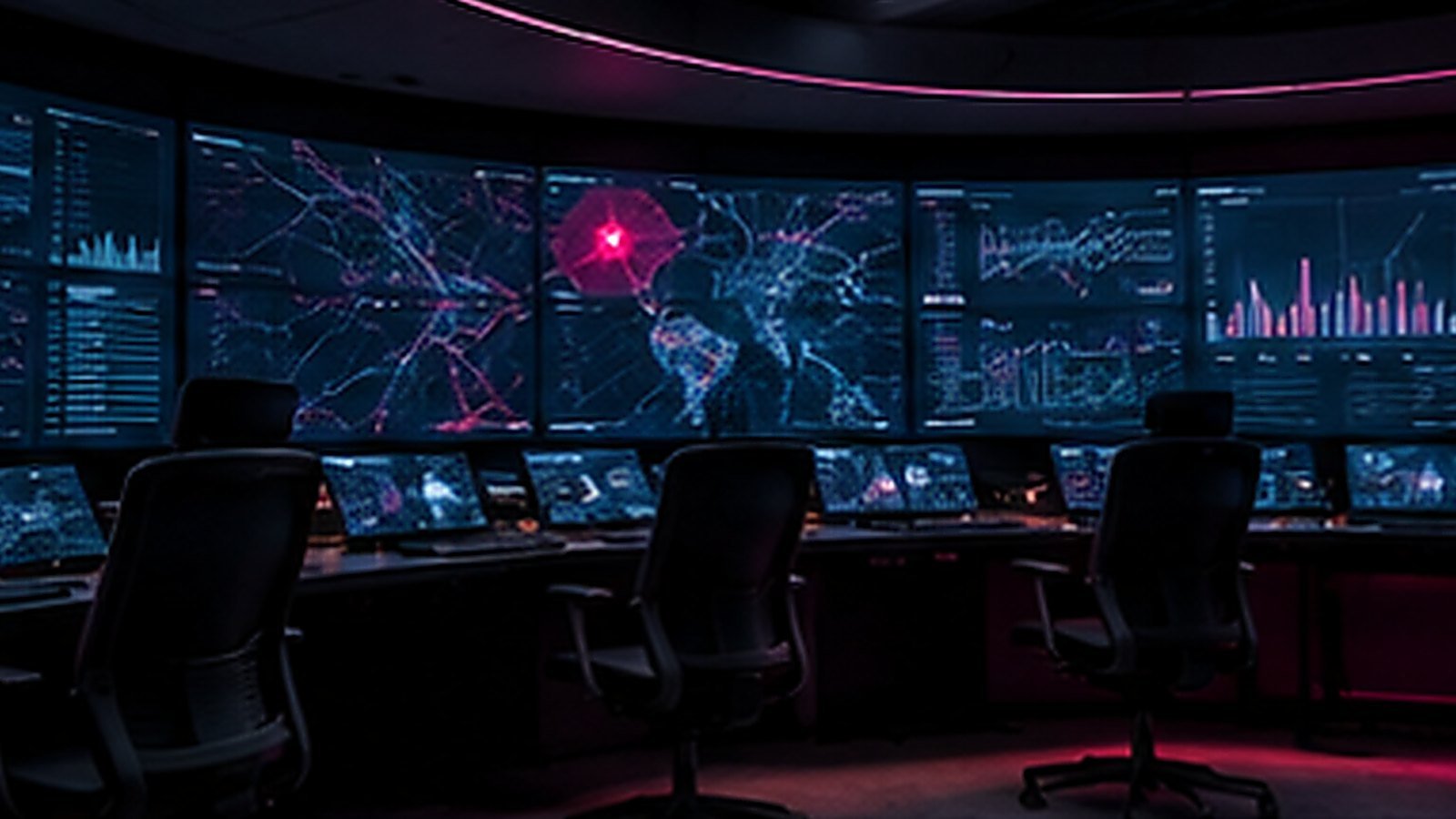
Every critical system is ultimately run by people. Behind the services that keep cities moving, energy flowing and public services available, there are operators watching, deciding and responding. The tools they use shape how well they can do that job, especially on the worst day.
Operational command, the screens, alerts, workflows and controls that operators rely on, is often treated as an afterthought: a dashboard assembled at the end of a project from whatever data is available. We treat it as a design discipline in its own right.
Calm by default
The most important quality of a good command environment is calm. When everything is normal, the display should look normal, quiet and uncluttered. Attention should be drawn only to things that need it.
That means resisting the temptation to show everything. A screen full of flashing indicators trains people to ignore indicators. A carefully designed overview, with clear states and sparing use of colour, makes real problems stand out instantly.
Alerts that deserve attention
Alert fatigue is one of the biggest risks in any operations room. When operators receive hundreds of notifications, the important ones get lost. We design alerting around a few principles:
- Every alert must require a decision or an action. If it does not, it is information, not an alert.
- Alerts describe impact, such as “users cannot log in”, not just symptoms.
- Related alerts are grouped, so one root cause produces one incident, not fifty messages.
- Every alert links to guidance on what to check and what to do.
In a crisis, people do not rise to the level of their tools. They fall to the level of their preparation. Good tools are part of that preparation.
From awareness to action
Seeing a problem is only half the job. Operators also need to act: rerouting traffic, isolating a component, switching to a backup, informing the people affected. The best command environments put those actions alongside the information, with clear confirmation steps for anything that cannot be undone.
Every action is recorded: who did what, when and why. That record supports handover between shifts, review after incidents and accountability to regulators and the public.
Designed with operators
Operational tools are used under pressure, at night, by tired people. They must be designed with those people, not just for them. We observe how operators work, test designs in realistic exercises and refine them based on what actually happens, not what was expected to happen.
Resilient in its own right
A command environment that fails during an incident is worse than useless. It must be engineered to the same standard as the systems it oversees: independent monitoring paths, fallback views, clear behaviour when data is delayed and the ability to operate from alternative locations.
When command and control are designed well, critical systems become more predictable, incidents become shorter and the people responsible for them can do their jobs with confidence.