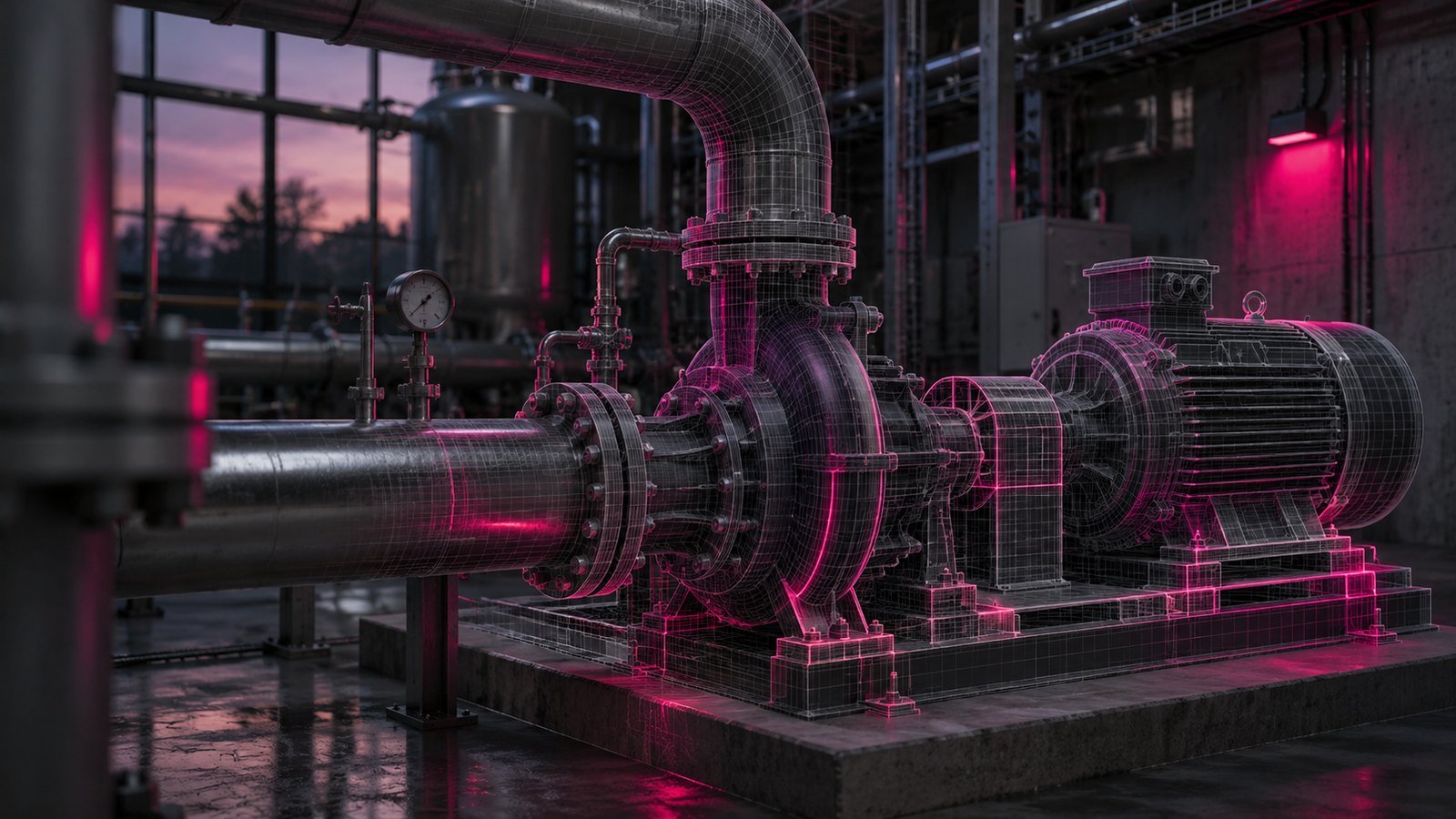
Digital twins have become one of the most talked-about ideas in technology. A live, virtual model of a building, a network, a production line or an entire site, updated in real time and used to understand, predict and improve the real thing.
The idea is powerful. But a twin is not a 3D model with a dashboard attached. A twin is a commitment to truth: a promise that what you see in the model reflects what is happening in the world closely enough to make decisions on. Everything depends on keeping that promise.
Start with the decision, not the model
The most common mistake is to start with the visualisation. Teams build a beautiful model, connect whatever data is available and then look for questions it can answer.
We work the other way round. What decision will this twin improve? Maintenance scheduling? Energy use? Capacity planning? Safety? Each decision defines what the twin must represent, how accurate it must be and how fresh the data needs to be. A twin for long-term planning can tolerate daily updates. A twin used to operate equipment cannot.
The data is the hard part
The physical world is messy. Sensors drift. Assets are replaced without the records being updated. Two systems describe the same pump with different identifiers. Data arrives late, out of order or not at all.
A trustworthy twin needs:
- A clear asset register. Every physical thing has one identity, used consistently across systems.
- Known data lineage. For every value in the model, you can trace where it came from and when.
- Quality checks at the edge. Obvious errors are caught before they reach the model.
- Honest freshness. The model shows how old each piece of information is, not just the information itself.
A twin that looks confident while showing stale data is worse than no twin at all. It invites decisions based on a world that no longer exists.
Show uncertainty, don’t hide it
Physical systems are never fully observed. There are always gaps between sensors and assumptions inside models. Good twins make that visible. They distinguish measured values from estimated ones, show confidence ranges for predictions and flag where the model has not been validated against reality.
This is not a weakness. Operators trust tools that are honest about their limits far more than tools that pretend to be perfect.
From mirror to simulator
Once a twin reliably mirrors the present, it becomes possible to ask “what if?” What if we take this line out for maintenance on Thursday? What if demand rises by a fifth? What if this component fails?
Simulation is where much of the value lies, but it depends entirely on the foundations. A simulation built on a model that does not match reality simply produces confident fiction faster.
Build it to last
Physical assets live for decades. The twin that represents them must outlive several generations of software, sensors and staff. That means open data formats, documented models and an architecture that allows parts to be replaced without starting again.
That is why we engineer twins the same way we engineer any critical system: architecture first, data quality treated as a feature, failure behaviour designed in and everything documented. The goal is not a striking demonstration. It is a model people can rely on for years.